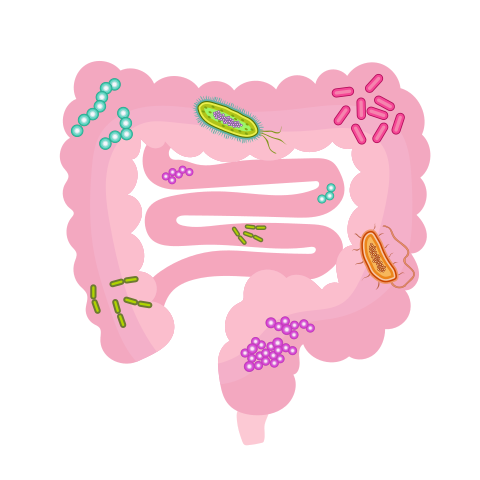
For several decades, scientists have been trying, varyingly successfully, to explain autism and develop treatments. A recent American study, published in Nature and loosely summarized in The Latest News, has uncovered a link between the arm and brain function of autistic people.
Certain gut bacteria are more common in autistic people than in nonautistic people.
The researchers say they are shedding new light on the complexity of autism and opening possibilities for further insights. In their research, they focused on the gut bacteria, molecules, and the activity of genes in the brains of both autistic and non-autistic children.
What makes this study newsworthy, according to the researchers, is their renewed approach, with which they wanted to understand how the microbiomes behaved specifically in autistic children. By applying advanced methods such as complex mathematical algorithms, they investigated patterns and connections in immense datasets from various studies.
In this way, they discovered that certain bacteria were more common in the intestines of autistic children, while others were more numerous in non-autistic or neurotypical children. In addition, certain bacteria in the guts of autistic children reacted differently to food, suggesting there was a possible link between food and behavioral responses, according to the researchers.
Gut-brain relationship unique to different autistic individuals
Specific bacteria and molecules showed striking differences between the guts of people with autism and those of neurotypical individuals, according to the researchers. These variations were found to be associated with changes in brain activity, dietary choices, and even inflammatory responses in the body. These changes were found not to be uniform but to vary between autistic people, even within the same families. This suggests that the gut-brain relationship is unique to different autistic individuals.
The composition of gut bacteria additionally adds an extra layer of complexity to the role genetics play, a layer that can vary from person to person and influence the development of autism. An important finding in this study is that changes in gut bacteria appear to be closely related to the symptoms of autism. The researchers think this indicates that our gut health may be affecting our behavior and emotions, especially in autistic people.
Caution advised according to researchers.
Despite their findings, the researchers emphasize that autism is still far from understood. Previous studies on gut and brain function in autistic people often yielded conflicting results, partly due to differences in study design and the populations studied.
According to the researchers, it remains essential to keep a close eye on all the technical factors of the study when studying intestinal bacteria and other complex data of the body. Unraveling the complex interactions in our bodies that could be at the root of autism remains a difficult task, especially given the diversity of symptoms in different autistic individuals.
The researchers do think that their research and the discoveries in it, can shed new light on the precise links that lie at the basis of being autistic, and thus indirectly contribute to treatments, which they believe is still the end goal of autism research.
Some critiques from my perspective as an autism experience worker
From my perspective as an autism experience worker, I do have some criticisms of this research.
First, the research focuses too much on the biomedical aspect of autism, while many other factors (such as social, environmental, personal) also play a role in the association of intestinal function, brain, and autism.
In addition, I think it is important that it is recognized that autistic people experience a wide range of experiences and symptoms. Moreover, if researchers want to be complete and conclusive, it is very important that they fully integrate autistic voices and experiences into their research on autism from start to finish. That does not seem to have been the case in this study, although it is not clear to me for the time being whether the researchers themselves are autistic or not.
In any case, involving different voices from the autism community can provide valuable insights into how the research discussed here can affect, preferably in a positive sense, the daily lives and quality of life of autistic people and their near and far stakeholders. That perspective is still too lacking in research and seems to be completely absent from this study. This increases the risk that this type of research will be a miserable waste of energy and resources that could be better used elsewhere.
Finally, avoiding stigmatizing research, to which this research occasionally tends to be, is also important, especially if a direct causal link between intestinal flora and behavior in people with autism would be suggested, because this gives an enormously distorted picture.
To conclude, perhaps the most important thing is that we must continue to guard against the assumption (and perhaps delusion) that biomedically inspired technical solutions are the only path to understanding and improving the quality of life of autistic people and their environment.
Morton, J.T., Jin, DM., Mills, R.H. et al. Multi-level analysis of the gut–brain axis shows autism spectrum disorder-associated molecular and microbial profiles. Wet Neurosci 26, 1208–1217 (2023). https://doi.org/10.1038/s41593-023-01361-0

 The European Autist