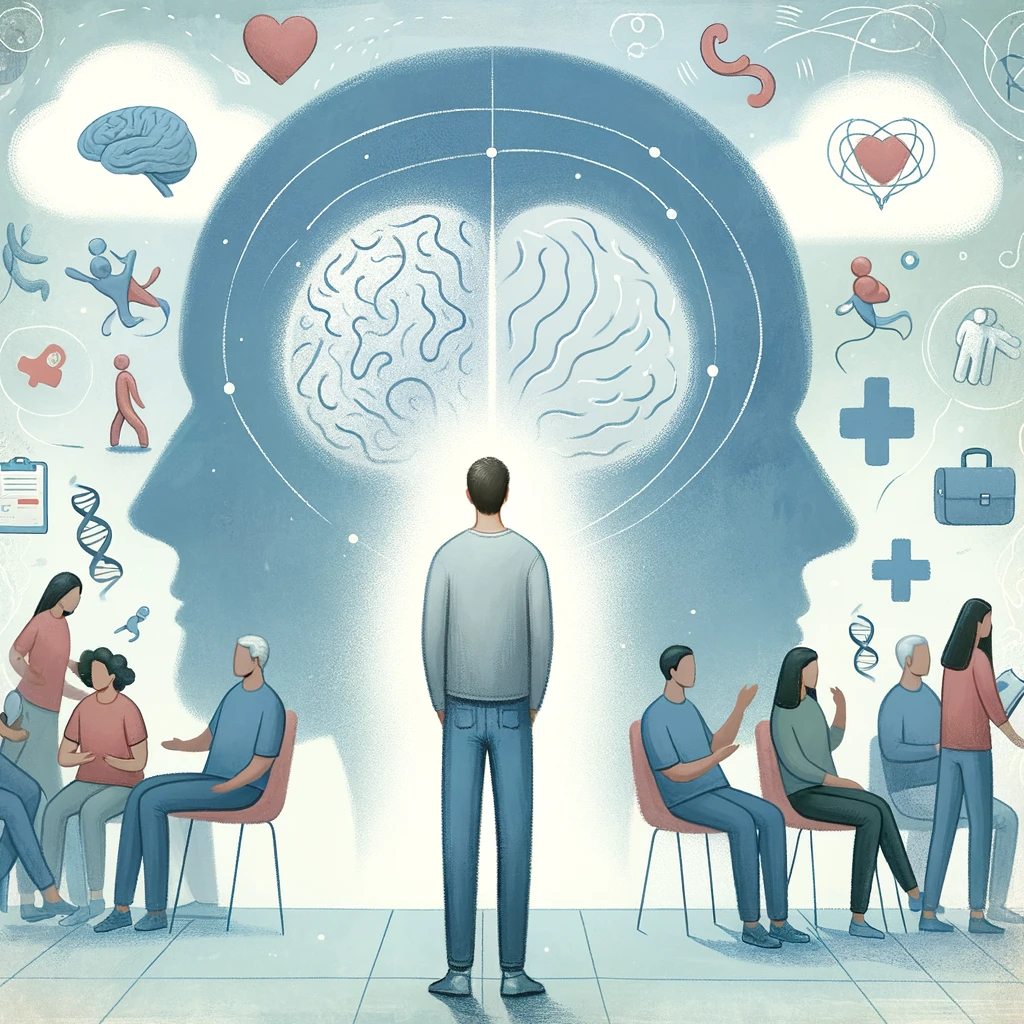
From the start, I felt distinctly different. This difference was evident to others, they often perceived it as if I was odd or out of place. I felt like an outsider among my peers. At school, this disparity became more apparent. My classmates seemed different in their actions and thoughts, which were sometimes strange and baffling to me. Their behaviors were often disorganized and sluggish, and their questions could be perplexing. However, I had the ability to concentrate on my interests, something they seemed to struggle with.
Between six and eight years old, children typically understand what’s considered normal. It was during this time I noticed my differences in interests, social comfort, emotional intensity, and reactions. I later understood these traits were part of my autism, a realization that also became apparent to my peers, leading them to either avoid or try to assist me.
Interacting with others was challenging, so I often chose solitude. Their conversations seemed uninteresting and hard to follow. A mutual understanding emerged that friendship was unlikely.
Acknowledging that I couldn’t change others, I focused on understanding and improving myself. This meant exploring the reasons behind my differences and how they influenced my social interactions. Identifying ways to adapt and recognizing my limitations became my focus.
As a child, I underwent various medical evaluations to decipher these differences. Doctors conducted thorough examinations, from blood tests to brain scans, to determine whether my differences were due to a temporary condition or a permanent aspect of my being, like autism or a personality trait.
My journey involved numerous doctor visits. Some were more helpful than others. After about five years, part of my differences was attributed to a medical condition, a very rare metabolic disorder, for which I received a solid diagnosis and treatment at a university hospital. This disorder meant I had to follow strict dietary rules, take lifelong meds and had regularly check-ups at the university hospital (about three hours drive away from home).
However, even with the meds and treatment for the metabolic disorder differences remained. I worked hard to enhance my social and communication skills through extensive training and therapy.
Despite a lot of improvements, I still felt distinct from others, especially as I grew older. I wasn’t interested in fashion trends, competition, small talk, or crowded spaces. Misunderstandings and unclear rules often led to conflicts.
These challenges were frequently ascribed to my medical condition, which was more noticeable. Specialists and others’ reactions helped me understand the limitations associated with what was often labeled a ‘disability.’
When my autism was formally diagnosed, it clarified that my differences were twofold: my physical appearance (the visible disability) and my unique communication style due to autistic thinking. This dual aspect influenced how I received support and interacted in two different realms.
Dealing with these differences has been a dual challenge, leading to a sense of isolation in two respects.
On one hand, I have a permanent disability, not just a limitation or chronic condition. The medical professionals who supported me often didn’t acknowledge autism in gifted adults, focusing solely on medication and traditional medical approaches without considering broader discussions in educational or parental settings.
On the other hand, my way of processing information affects my communication and social interactions, which feels like a disorder and a disability. While psychologists provided support, they sometimes disagreed with the medical experts.
Even among those like me, there’s a belief that autism is merely a different way of being, not a limitation. However, this is not always the case.
Therefore, I will likely always feel distinct, both in terms of my medical and psychological differences. This is what I refer to as a ‘double difference’ or, simply, a complex situation.”

 The European Autist