While an autism diagnosis empowers self-discovery and growth, its true value lies in authenticity, not output.
Receiving an autism diagnosis is a deeply personal experience. For many, it brings clarity, self-understanding, and validation after years of uncertainty. It opens doors to new possibilities and ways of thinking about yourself and the world.
But as people begin to explore these opportunities, they may also face pressures to use their diagnosis to prove their worth or to achieve external success. This article explores how an autism diagnosis can lead to personal and professional growth while keeping its true purpose in focus: self-acceptance and authenticity.
An autism diagnosis is not a product, transaction, or investment to be ‘recovered’; it’s a deeply personal process of self-understanding and validation.
The Personal Value of a Diagnosis
An autism diagnosis is more than a label. It helps you understand your strengths, challenges, and needs. For many, it is a moment of relief, answering questions they’ve had for years. It can allow you to seek accommodations, build stronger relationships, and make choices that fit your unique way of living. The true value of a diagnosis lies in the self-awareness it brings, not in how much money or recognition it can generate.
While it’s natural to think about how this new understanding might connect to opportunities like in the list below, it’s important to remember that your worth isn’t tied to how productive or visible you are. An autism diagnosis is valuable because it allows you to live authentically, not because of what you can do with it.
Opportunities for Growth
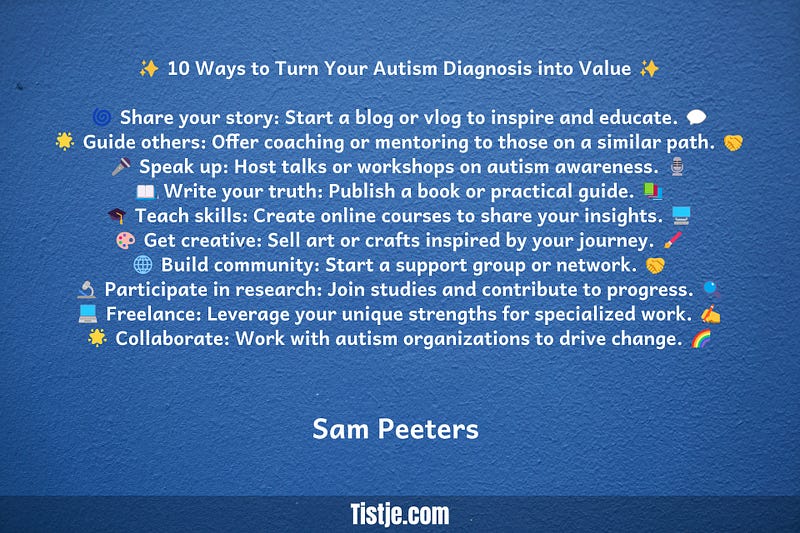
If you feel inspired, an autism diagnosis can help you create meaningful connections and opportunities. Many people find joy and purpose in sharing their experiences, building communities, or using their skills to support others. Here are some ways this can be done:
1. Sharing Your Story
Some people choose to write, vlog, or speak about their lives as autistic individuals. These stories can inspire and educate others, helping to break down stereotypes and build understanding. Platforms like blogs or YouTube channels make it easier to reach a wide audience. However, it’s important to set boundaries. Sharing should feel empowering, not exhausting, and you shouldn’t feel pressured to share more than you’re comfortable with.
2. Helping Others
Your personal journey can provide valuable insight for parents, newly diagnosed adults, or organizations looking to create inclusive environments. Whether through coaching, mentoring, or advocacy, helping others can be fulfilling. But this kind of work requires time, energy, and emotional commitment, so it’s essential to take care of yourself and work at a pace that suits you.
3. Using Your Talents
For those with artistic or technical skills, an autism diagnosis can help highlight strengths like creativity, attention to detail, or innovative thinking. Whether you sell art, freelance in a specific field, or develop new products, your talents can create opportunities for income and connection. However, it’s important to protect the joy in what you do. Turning a passion into a business should feel rewarding, not like an obligation.
Any choice to share our experience — through art, stories, or coaching — should be voluntary and intrinsically motivated, free from pressure to perform or prove its worth
4. Advocacy and Collaboration
Working with organizations that support autistic people can be another way to create impact. Your lived experience is a powerful tool in shaping better policies and programs. Many groups are eager to partner with autistic individuals to build meaningful campaigns or provide training. If this feels like the right fit for you, it can be both financially and emotionally rewarding.
Framing an autism diagnosis in economic terms suggests it isn’t inherently valuable unless it yields financial or social returns, reducing something profoundly personal to a mere economic calculation.
Challenges to Consider
While these opportunities can be empowering, they also come with challenges. It’s important to approach them thoughtfully and understand the potential pressures they bring:
- Burnout and Overwork: Many autistic individuals experience sensory overload or fatigue, especially in high-energy roles like public speaking or constant content creation. It’s okay to step back and prioritize your well-being.
- The Pressure to Perform: Society often expects autistic people to prove their value through productivity or by educating others. This can feel overwhelming and unfair. Your value isn’t tied to how much you do.
- Maintaining Boundaries: Sharing your story or creating work for others can sometimes blur personal boundaries. Protecting your time, energy, and privacy is essential.
An autism diagnosis is not a product, transaction, or investment to be ‘recovered’; it’s a deeply personal process of self-understanding and validation.
What Really Matters
The most important takeaway is that an autism diagnosis is valuable because it helps you understand and accept yourself — not because of what you achieve with it. Any decision to share your experiences, create, or advocate should come from a place of genuine desire, not pressure or expectation.
Whether you choose to pursue opportunities or simply focus on living authentically, your diagnosis is a tool for self-discovery and growth. The world needs to learn to value autistic individuals for who they are, not for what they produce. By prioritizing your own well-being and embracing your uniqueness, you can find meaning and fulfillment in ways that work best for you.

 The European Autist