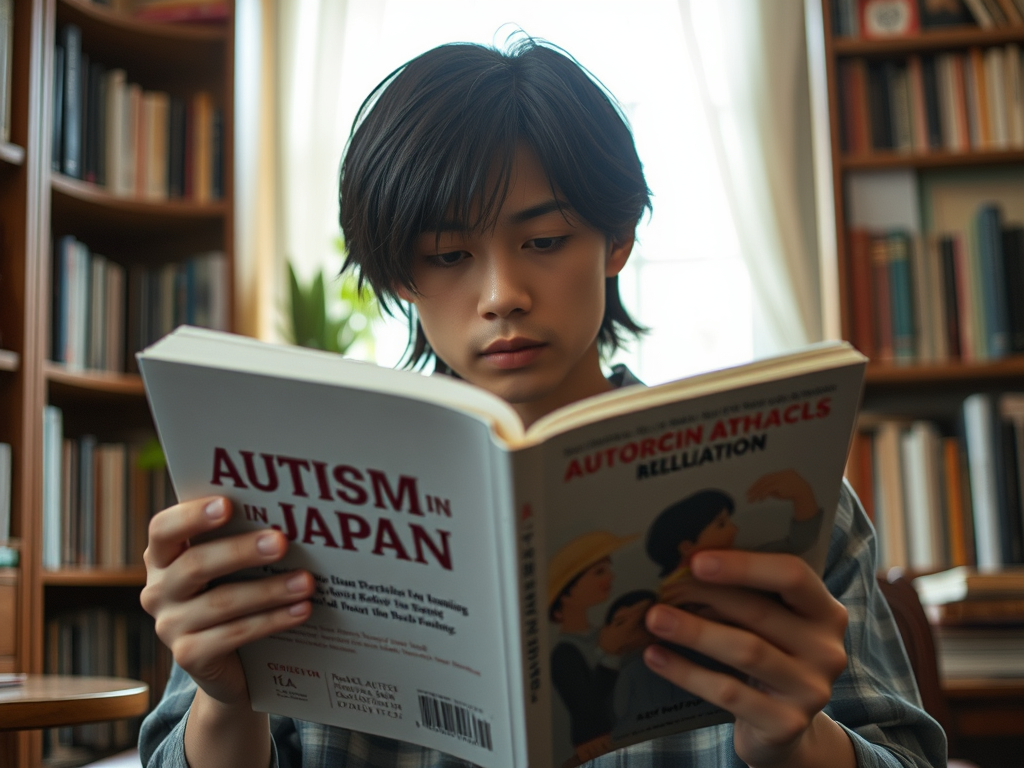
Reading about autism in Japan made me realise my Western privilege — being different here isn’t just hard, it’s at least theoretically acceptable.
I’ve been thinking a lot lately about privilege. Not the kind we usually talk about — race, class, gender — but something I never considered before: the privilege of being autistic in a culture that, despite its many flaws, at least pays lip service to celebrating individuality.
A few days ago, I came across research that stopped me in my tracks. It was the first comprehensive study of autistic adults in Japan, and reading it felt like looking into a funhouse mirror of my own experience — familiar in some ways, but distorted by cultural forces I’d never had to navigate.
The Weight of Different Expectations
As I read about these seven Japanese adults sharing their stories, I was struck by how their early experiences of “feeling different” carried such a different weight than mine. Yes, I’ve always known I was different. Yes, I’ve struggled with that knowledge. But there’s something profound about growing up in a culture where being different isn’t just challenging — it’s fundamentally unacceptable.
One participant, Yusuke, wrote about desperately wanting to be “a normal child.” I remember having similar thoughts, but in my context, those around me would often counter with messages about how “normal is boring” or “everyone is unique in their own way.” These weren’t always convincing, and they didn’t erase the pain of not fitting in, but they offered an alternative narrative.
The Japanese participants didn’t seem to have that alternative narrative available to them. In a culture where “the nail that stands out gets hammered down,” being different isn’t just socially difficult — it’s culturally forbidden.
When Excellence Becomes a Target
What really got to me was reading about how academic success actually made things worse for these individuals. One participant was bullied specifically because of her good grades. I’ve spent years in online autistic communities where people celebrate their special interests and intellectual pursuits, where being “the smart kid” is often worn as a badge of honor, even if it came with social costs.
But imagine if your strengths — the very things that helped you survive and find meaning — became additional reasons for rejection. Imagine if excellence itself was seen as a form of non-conformity that needed to be punished.
It made me think about all the times I’ve been told to “embrace my differences” or how my hyperfocus and attention to detail have been reframed as professional strengths. These aren’t perfect solutions, and I’ve certainly faced my share of discrimination and misunderstanding. But they represent possibilities that seem largely absent from the experiences described in this research.
The Family Response That Changed Everything
Reading about how every single participant was initially rejected by their families after sharing their diagnosis was devastating. Not one positive family response. Not one.
I thought about my own diagnosis conversation with family members. Yes, there was confusion, some denial, questions about whether I was “really autistic” or if this was just an excuse. But there was also eventual acceptance, efforts to understand, apologies for not recognizing my struggles earlier.
The Japanese participants described families who actively rejected the diagnosis, sisters who refused to believe it was possible, mothers who desperately wanted to maintain the fiction of “normalcy.” The isolation this must have created — receiving a diagnosis that finally explains your lifelong struggles, only to have your closest relationships conditional on pretending that diagnosis doesn’t exist.
Professional Gaslighting as Standard Practice
Perhaps most shocking was learning that professionals actively discouraged these individuals from disclosing their autism. Doctors telling patients to “pretend to be normal and work as a normal person.” Employment counselors focusing on what participants couldn’t do rather than their strengths.
I’ve had my share of unhelpful professionals, therapists who didn’t understand autism, employers who saw my differences as deficits. But I’ve also encountered advocates, understanding supervisors, accommodating colleagues. The idea of systematic, institutional pressure to mask — not just from society, but from the very people supposed to help — is chilling.
The Privilege I Never Recognized
This research has made me confront something uncomfortable: how much of my ability to develop a positive autistic identity has been dependent on cultural context I took for granted.
Yes, I’ve faced discrimination and misunderstanding. Yes, I’ve struggled with masking and burnout. Yes, I’ve dealt with employment challenges and social rejection. But I’ve done so in a context where alternative narratives existed — where being different could sometimes be reframed as being special, where neurodiversity movements offered community and pride, where self-advocacy was possible and sometimes even celebrated.
The Japanese participants seemed to exist in a world where these alternative narratives simply weren’t available. Where difference was pathology, full stop. Where the only acceptable response to autism was to hide it so completely that it effectively didn’t exist.
What This Means for All of Us
Reading this research has fundamentally changed how I think about autism advocacy and community building. It’s made me realize how Western-centric our conversations have been, how much we’ve assumed that our struggles and solutions are universal.
It’s also made me appreciate something I never thought to be grateful for: the simple fact that I grew up in a culture where being different was at least theoretically acceptable, where individuality was valued even if not always practiced, where there were spaces — however small — for people like me to exist authentically.
But more than that, it’s made me think about responsibility. If I have access to platforms, communities, and narratives that allow me to develop and share a positive autistic identity, what do I owe to those who don’t have those same opportunities?
The Universal and the Particular
What strikes me most about this research is how it reveals both the universal and culturally specific aspects of autistic experience. The feeling of being different, the challenges with social navigation, the sensory and communication differences — these seem consistent across cultures.
But how those differences are interpreted, supported, or suppressed varies dramatically based on cultural values and social structures. In Japan’s conformist culture, traits that might be quirky individuality elsewhere become sources of profound shame and rejection.
This has implications for how we think about autism support globally. It’s not enough to export Western models of understanding and accommodation. We need culturally sensitive approaches that recognize how different social contexts shape the lived experience of being autistic.
Moving Forward with Humility
This research has humbled me. It’s made me recognize privileges I never knew I had while simultaneously deepening my understanding of the universal human need for acceptance and belonging that transcends cultural boundaries.
The courage of these seven individuals in sharing their stories, despite facing systematic rejection and discrimination, is extraordinary. Their experiences remind us that behind every autism diagnosis is a human being seeking nothing more than the right to exist authentically — a right that should be universal but clearly isn’t.
As I continue my own journey and work in the autism community, I’m carrying their stories with me. They’ve changed how I think about my own experience, expanded my understanding of what it means to be autistic in different contexts, and reinforced my commitment to building a world where neurodivergent people can thrive regardless of where they’re born or what culture they navigate.
Their voices matter. Their experiences matter. And their resilience in the face of such overwhelming societal rejection reminds us why this work — building understanding, fighting stigma, creating inclusive communities — is so vital.
We have so much more work to do, and it’s work that must be truly global in scope if it’s going to mean anything at all.
Harada, N., Pellicano, E., Kumagaya, S., Ayaya, S., Asada, K., & Senju, A. (2025). ‘I don’t think they understand the reality of autism’: The lived experiences of autistic adults in Japan. Autism, 0(0). https://doi.org/10.1177/13623613251355303

 The European Autist