Understanding the paradox of psychiatric labels in a world that demands both conformity and authenticity
Labels like autism exist in a strange tension — somewhere between relief and limitation, between gateway and cage. I’ve learned to see labels neither as heroes nor villains, but as ambiguous instruments that can serve as both necessary language and dangerous identity traps.
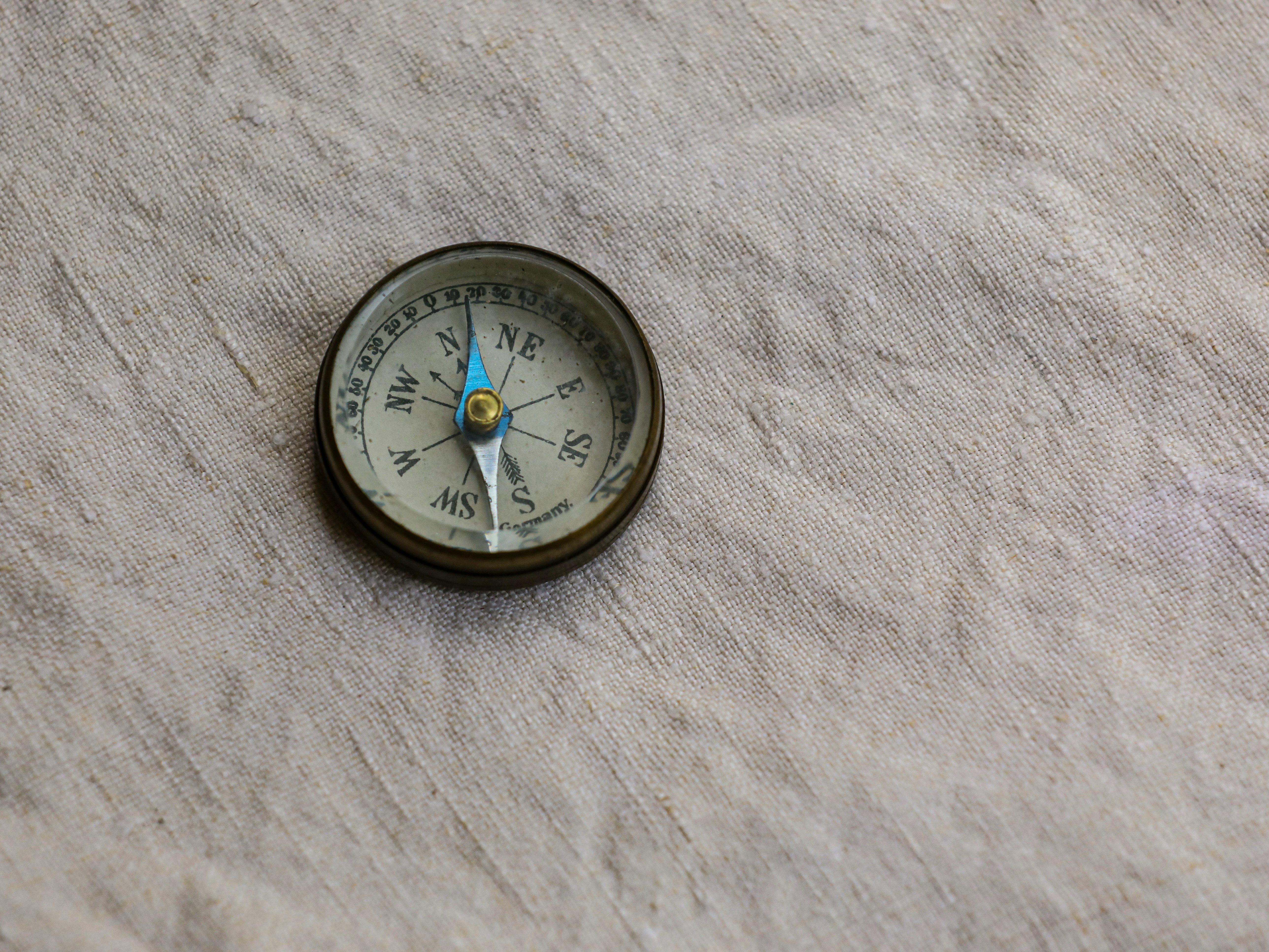
Through my own journey with various labels — formal, recognized, stigmatizing, and informal — I’ve discovered something crucial: the answer isn’t abolishing labels or embracing them without question. It’s building a culture where they function as a compass, not a cage.
From Word to Diagnosis: A Necessary Distinction
In public debate, terms like “label,” “classification,” and “diagnosis” often blur together, as if every word automatically carries medical weight. But I’ve experienced an important gradation: from informal labels (“different,” “highly sensitive”) through broader categories (neurodivergent) to classification within diagnostic systems (like the DSM-5-TR), and finally to official diagnosis with all its consequences.
This refinement matters. It shows that not every naming means medicalization. A label can be a provisional hypothesis, a language for organizing experience before a medical file exists.
Labeling isn’t just something professionals do — it’s something people constantly do themselves, consciously or unconsciously: from being named by others to self-diagnosis, searching for words that make the feeling of being different more understandable.
The label functions as a starting point, not an endpoint. It’s not a final description of who I am, but a continuously evolving working hypothesis for framing experiences. Fatigue, overstimulation, and social friction gain new meaning when understood within the framework of autism. Yet they can also have other explanations, alongside and together with those from autism.
Against public opinion that either moralizes labels (often demonizes them) or completely medicalizes them, I find myself in a third position: the label as an instrument for self-understanding and communication, which only becomes problematic when confused with someone’s complete identity or when it fails to evolve with someone’s development.
The Personal Journey: From Relief Through Grief to Integration
Long before the word “autism” was applied to me, there was already a simmering theme of being different. That doesn’t mean I always felt strange or deviant. Often, I found others strange instead.
I felt like I was consistently hitting invisible walls, getting structurally exhausted from a rhythm that seemed normal to others, and not understanding why standard explanations (“you’re just tired,” “you need to be more resilient”) didn’t capture the reality.
This formed the undercurrent in which the initially informal label from others evolved into a diagnosis.
The Relief Phase
The first confrontation with my autism diagnosis brought relief through the discovery that I wasn’t “lazy,” “contrary,” or “broken,” but autistic. That created space and emotional order. The formal label acknowledged the experience that my brain fundamentally works differently.
I began seeing my failures increasingly as structural differences, not as moral shortcomings or character flaws.
That relief was more than symbolic — it formed the basis for self-compassion. Without a diagnosis, you often seek blame exclusively in yourself or in society. Only when the label offers an alternative explanation can a rigid, moralizing self-image shift toward a more understanding relationship with your own limits.
The Grief Phase
After initial relief often comes a mourning phase. The insight that certain difficulties aren’t “therapy-curable” but remain a permanent part of who you are hits hard. The diagnosis confronts you with limits: no matter how well you learn to compensate or gain insight into your autism, many situations will always remain burdensome or impossible.
That grief isn’t a deviation but a necessary part of the growth process toward finding balance between efforts to “become normal” and searching for a livable form of being different.
The Integration Phase
In a later stage, a more integrated attitude emerges: your label doesn’t fully define you, but it is an essential part of yourself. You no longer see autism exclusively as a medical defect, but you don’t romanticize it either by attributing talents and strengths to it.
The struggle transforms into self-direction: instead of fighting against your own nature or societal structures, you learn to work with them by respecting boundaries, planning recovery time, and using tools or support (including medication) without shame. The label then no longer functions as a chain, but as an instruction manual.
The Benefits: Language, Rights, and Community
Reframing Behavior
A fundamental added value of labels is that they serve as subtitles for behavior that would otherwise be morally condemned. Without a label, you’re quickly seen as “antisocial” or “difficult” when overstimulated or leaving a family party early. With the label, the framework shifts: lack of eye contact can be interpreted as a different form of focusing, not as disinterest.
Accessing Support
In the current Belgian and Flemish system, a label is often literally the key to support. Without official diagnosis, access to certain budgets and specialized guidance usually remains closed or much more expensive. In education and work too, the label creates a limited legal framework for requesting reasonable accommodations: low-stimulus workplaces, written instructions, flexible hours.
Without a label, you remain even more dependent on goodwill; with diagnosis, accommodations become a right — though often one that still must be fought for.
Finding Community
Labels don’t only function in files but also in communities. Meeting peers — other autistic people — can bring deep relief and recognition. In such communities, there’s often no endless need for explanation: shared experience and humor about the absurdity of neurotypical conventions create connection.
Building Self-Compassion
If one core benefit must be highlighted, it’s self-compassion. Through diagnosis, internal dialogue shifts from self-blame to understanding. You stop seeing yourself as a failed pear and accept yourself as an apple (or lemon) that will never get along well with pears, but can become a good apple (or lemon). That shift has concrete consequences: you experience boundaries less as failure, asking for help becomes less loaded, and space emerges to organize life according to your own neurological needs.
The Shadow Sides: Boxes, Stigma, and Inflation
Diagnostic Overshadowing
A label becomes a box when it becomes the end of the conversation instead of the beginning. When healthcare providers, teachers, or colleagues stop seeing the person and only read “the autism,” the label becomes a reduction. Every emotion — anger, sadness, frustration — is then immediately dismissed as “sensory processing,” while it could just as easily be a legitimate human reaction.
This phenomenon is called “diagnostic overshadowing”: an all-dominating focus on the diagnosis that causes other aspects to be missed.
Stereotype Burden
Social interaction with labels is often saturated with stereotypes. Statements like “you don’t look autistic at all” are well-meaning compliments but promote a negative image of “the real autistic” and minimize the internal struggle of someone who masks well.
Equally painful is the assumption that autistic people would always and everywhere be hypo- or hyperempathic, while everyone has their own empathic profile.
Identity Fusion
Another risk is people binding their identity too strongly to the label, especially in online environments where diagnoses sometimes circulate as aesthetic accessories. The line between explaining why something is difficult and using the diagnosis as a free pass to avoid growth can become thin.
When “I have autism” shifts to “I can’t do this because I have autism,” danger arises for cultivated helplessness. The label then becomes a ceiling instead of a starting point.
Concept Inflation
An important social-critical perspective is that of concept inflation. When terms like autism are randomly deployed in everyday language (“I’m so autistic today”), they lose their weight and specific meaning. This has two harmful effects:
- Serious limitations become trivialized: if everyone is “a bit autistic,” nobody seems to really need help anymore
- It becomes harder for people with severe problems to ask for understanding, because their real struggle drowns in a sea of non-committal self-labeling
Labels in Context: The Social Mirror
Labels don’t emerge in a vacuum but are strongly culturally determined. That doesn’t mean autism isn’t “real” in a biological sense, but that the boundary between “normal” and “deviant” shifts with the zeitgeist and economic norm.
In a lightning-fast, stimulus-rich, hyperstimulating society where flexibility, multitasking, and permanent availability are the norm, people with a different neurological profile get stuck faster. In a slower, more structured past, the same person might simply have been considered “quiet” or “meticulous.”
A diagnosis thus functions as a measure of deviation from a dominant norm. This places labeling in the middle of a debate about capitalism, productivity, and performance pressure, making clear that not so much brains, but especially systems are changeable.
Recent years have shown a clear increase in diagnoses, partly due to changing understanding of autism and relatively lowered thresholds. This is ambiguous. It’s positive that “silent autistics” — often women, or men with intense verbal and tight masks — are finally being seen. Yet the risk creeps in that some people see this as reason to medically label normal human variation.
The challenge exists in taking both real underdiagnosis (many groups get less chance for diagnosis and recognition than before) and real inflation risks seriously at the same time.
Toward an Alternative: From Diagnosis to Need
An important alternative perspective lies in the shift from diagnosis-oriented to profile-oriented work. The central questions then become: what is this person struggling with now, and what does this person need now? It becomes less important whether something formally falls under autism. What matters more is that the support profile becomes clear.
The diagnosis remains useful for files and legal frameworks but loses its dominance in daily interaction.
At the societal level, this leads to the idea of Universal Design: environments, schools, and workplaces are standardly arranged to be accessible for a broad variety of brains and bodies. Clear communication then isn’t an “adaptation for autistics” but the norm. Quiet rooms, remote work options, and low-stimulus workplaces aren’t exceptions upon showing a certificate but available options for everyone.
In such a society, the label becomes private information, something between person and doctor, instead of a permanent access ticket that must repeatedly come to the table to secure basic living and working conditions.
The Paradox of Now and the Dream for Tomorrow
Today we find ourselves in a paradoxical situation: labels are simultaneously necessary tools and potential obstacles. They’re necessary because they provide access to care, protection, and objectification of needs. Without labels, arbitrariness threatens.
At the same time, they’re obstacles when they degenerate into endpoints or selection mechanisms.
The task consists of using labels as route planners, not as destinations: they help assess where limitations lie but don’t determine what life someone may try to lead.
People with autism, ADHD, or burnout are often seen as society’s “canaries in the coal mine.” Their massive dropout says something about individual biology but at least as much about the toxicity of the social mine: too high tempo, too many stimuli, structural insecurity.
Using labels only to “harden” the canary — through therapy or medication — without restoring the ventilation system is a one-sided strategy. An and-and approach is needed: making systems softer and simultaneously providing specific tools.
My Hope: Normalization Without Banalization
My wish for the future is a culture where you can say “I have autism” with the same neutral matter-of-factness as “I’m left-handed,” without images of genius or tragedy automatically being attached.
Normalization without banalization: the label becomes factual information that helps with coordination, not moral judgment. At the same time, that normalization must be accompanied by preventing trivialization — it shouldn’t become a trendy term that obscures the weight of profound limitations.
Conclusion: Nuance as Guideline
Labels aren’t simple enemies or saviors but ambivalent instruments that simultaneously offer access, language, and community while also carrying risks of reduction, stigmatization, and inflation.
I find a label truly meaningful when it’s seen as a starting point: a route planner that helps understand your own inner world, claim rights, and make connections, without ever being able to or being allowed to be the complete map of identity.
The future of labeling lies not in radical abolition nor in uncritical expansion, but in a triple movement:
- Maintaining labels as legal protectors
- Building out Universal Design and need-based work
- Nurturing a culture where curiosity is more important than protocol
When professionals and environments dare to ask “what does this label concretely mean for you?” instead of “what does my handbook say?”, the weight shifts from the label back to the person behind it.
In such a world, diagnosis continues to exist, but it loses its monopoly on meaning. The person becomes the primary source of knowledge about their own experience again, and the label becomes what it should always have been: a footnote in a rich, complex life story, not a title page that overshadows the rest of the text.
This text was written as preparation for my participation in a panel at the Festival of Equality in Ghent, Belgium, organized by the Flemish organisations Curieus, Blinkout and Inclusieambassade (Embassy for Inclusion)


